The Best Time to Visit Bermuda
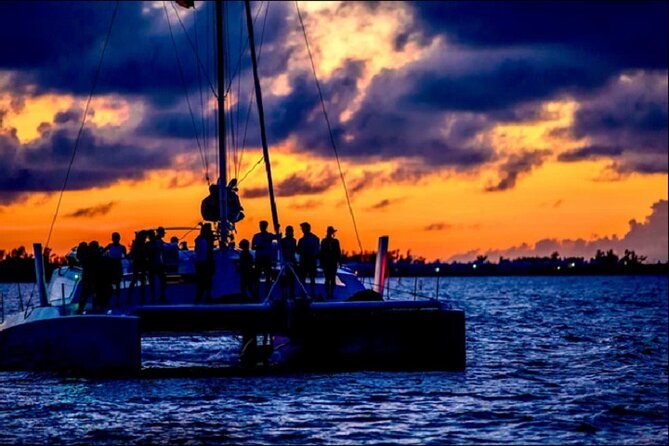
Bermuda is not a tropical island: it sits far out in the North Atlantic, with warm summers, mild winters and a sea that swings from the mid-60s to the low 80s Fahrenheit. When you go decides whether you swim, which Bermuda shore excursions run at their best, and how many ships share the pier.
When is the best time to visit Bermuda?
If you want to swim and have the full run of boat trips, come from June to September, when the sea is 77°F or warmer. If you want warm days with fewer thunderstorms, come in May or early June: May is the driest month on the Bermuda Weather Service's long-term normals. If you want quiet and short queues, come from December to March and accept a cool sea.
Your trade-off in late summer is the hurricane season, which peaks in September. Book with free cancellation and keep your eye on the forecast.
When is the cruise season?
Spring to autumn. Bermuda expected 179 cruise calls in 2025, against about 172 the year before, carrying over half a million passengers. Winter is almost empty of ships: one call in January 2025, one in February and eight in March.
That rhythm shapes your day at the pier. On a summer day with several ships in, the pier tours and the Dockyard fill first, so book yours ahead. In winter you have the island almost to yourself.
When is the sea warm enough to swim?
That depends on you, but here are the numbers to judge by. On the long-term normals the sea averages 66°F in January, bottoms out at 65°F in March, reaches 72°F in May and 77°F in June, and peaks at 83°F in August. It stays above 80°F from July to September.
Brandon G. found the water "still a little cool, about 72°F" on a shipwreck snorkel in mid-May; E H. snorkeled the wrecks in March at about 69°F and thought it worth it. The helmet dive supplies wetsuits and hot chocolate whenever the water is below 80°F.
What about hurricane season?
The Atlantic hurricane season runs from 1 June to 30 November. It peaks around 10 September, and most activity falls between mid-August and mid-October.
That does not mean you should expect storms every week. It means you plan for one: choose tours that refund up to 24 hours before, which nearly all of them do, watch the forecast, and keep the day after a cancelled trip free. The boats stay in for heavy rain or thunder in any month.
Is winter worth it?
If you come for walking and sightseeing, yes. Your daytime highs stay around 68 to 71°F from December to March, the towns are quiet, and you share them with few ships. St. George's, the Dockyard museum and the caves are as good in January as in July.
What you give up is warm water, the Orange ferry to St. George's and, in February, the lighthouse climb. Winter is also the wettest-feeling season: 15 to 17 days of rain a month from December to March.
Is spring a good time to go?
For many visitors it is the sweet spot. April and May bring daytime highs of 71 to 75°F, only 10 to 12 days of rain a month, and a sea that warms from 68°F to 72°F. The ships are back but not yet at their summer peak.
Spring is also when the island opens up for the season. From April the caves run a guided visit every 15 minutes; in May the Orange ferry to St. George's starts, and the Visitor Services Centres in Hamilton and the Dockyard stay open late on Wednesdays. If you plan to snorkel, pack for a cool first minute in the water.
Is autumn a good time to go?
October and November keep much of the summer: the sea is still 77°F in October and 73°F in November, and highs run from 79°F down to 75°F. The heat of August has gone, and the sea has not yet cooled.
The catch is the weather. October is the wettest month on the normals, with 6.35 inches over 16 days, and the first half of it still falls in the busiest stretch of the hurricane season. The Orange ferry stops at the end of October, and the season itself closes on 30 November. Book anything that sails with free cancellation.
When are the crowds thinnest?
From December to March, when the cruise calendar is nearly empty. In the cruise season, the quiet days are the ones with a single ship in port; check the Bermuda Tourism Authority's ship schedule before you book.
On any busy day, you can go small or go far. The two-stop snorkel takes ten guests, the walks take eight, and the crowds thin out towards St. George's.
Which tours run in every season?
The listings on sale set no closing season, and the drives, the caves and the walks run in any weather that lets a coach or a guide out. The jungle, lunch and snorkel day calls itself a summer excursion, so check its calendar outside summer.
The boats depend on the day. Flat water, no thunder and a warm sea make June to September the easiest months for them. In rough weather the shipwreck snorkel swaps the offshore wrecks for an inshore wreck and a shoreline reef.
How does the weather change the tours?
Rain matters less to you on land than at sea. Kristin T.'s beach stop on a cave day was rained off, and the guide swapped in more of the island instead. On the water, thunder and heavy rain keep the boats in, and the wind decides how bumpy the ride to the reef line is.
August has the most thunderstorm days on the normals, nine, and October the most rain, 6.35 inches over 16 days. The Crystal Cave trip is the best rainy-day choice: the cave is the same in any weather.
How far ahead should you book in each season?
In summer, book as soon as your ship's times are confirmed. The pier tours fill first on busy ship days, and the small boats have the fewest seats to go round: the two-stop snorkel takes ten guests, and each walk takes eight. Almost every listing refunds in full up to 24 hours before, so an early booking costs you little if your plans change.
In winter you can often book a day or two ahead, but check that your tour runs: the Titan drives and the short cave trip need ten guests before they go. The food walk is the one to be sure of, because it cannot be refunded in any season.
What should you pack for each season?
- June to September: sun cover, a hat and water. The sea is warm enough to go without a wetsuit; August brings the most thunderstorm days.
- October and November: a light rain jacket. October is the wettest month on the normals.
- December to April: a sweater for the evenings, when lows sit around 60 to 63°F, and a wetsuit or a short swim if you snorkel.
- Every month: a towel and a cover-up, because you cannot ride a bus or ferry wet or sandy.
What closes in some months?
- Gibbs Hill Lighthouse: closed for all of February.
- The Orange ferry from the Dockyard to St. George's: May to October only.
- Crystal Caves: closed 1 January, Good Friday and 24 to 26 December; guided visits every 15 minutes from April to September, every 30 in winter.
- Visitor Services Centres: open to 7pm on Wednesdays from May to September, and closed on New Year's Day, Good Friday, Christmas Day and Boxing Day.
What is each month like, in brief?
The Bermuda Weather Service's normals for 1949 to 1999, with what each month means for a visit.
| Month | High / low | Sea | Rain days | For a visit |
|---|---|---|---|---|
| January | 69°F / 61°F | 66°F | 17 | Quiet; lighthouse open |
| February | 68°F / 60°F | 65°F | 15 | Lighthouse closed all month |
| March | 69°F / 60°F | 65°F | 15 | Ships return; sea coolest |
| April | 71°F / 62°F | 68°F | 12 | Spring; caves every 15 min |
| May | 75°F / 68°F | 72°F | 10 | Driest; Orange ferry starts |
| June | 81°F / 73°F | 77°F | 12 | Warm sea; hurricane season opens |
| July | 85°F / 75°F | 82°F | 13 | Sea above 80°F |
| August | 86°F / 76°F | 83°F | 14 | Warmest; most thunder |
| September | 84°F / 74°F | 81°F | 15 | Warm sea; hurricane peak |
| October | 79°F / 71°F | 77°F | 16 | Wettest; Orange ferry ends |
| November | 74°F / 66°F | 73°F | 13 | Mild; hurricane season closes |
| December | 71°F / 62°F | 68°F | 17 | Cool; caves close 24-26 Dec |
The full table, with rainfall in inches and the seasons, is on our Bermuda weather by month page.
Frequently asked questions
What is the best time to visit Bermuda?
Should I avoid hurricane season?
Can I swim in Bermuda in winter?
Is anything closed in February?
What happens if the weather turns?
How cold is the water?
Tours that suit the season
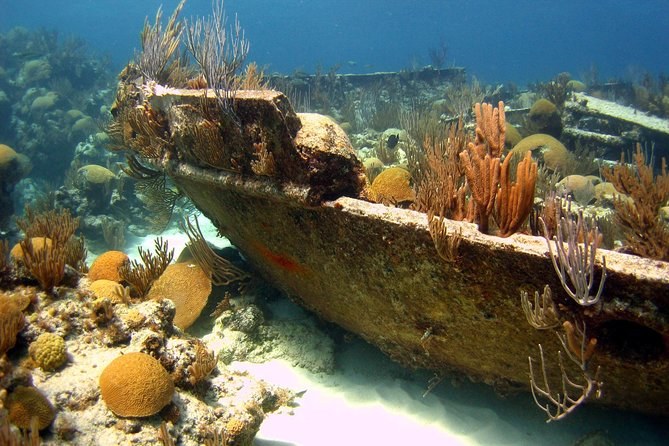
Shipwreck Snorkel in Bermuda
Three hours to the offshore reef and the wrecks of the Constellation and the Montana, with gear and flotation in the fare. For competent swimmers from age 5; in rough seas it moves to an inshore wreck and a shoreline reef.
From $105 per person
Check Availability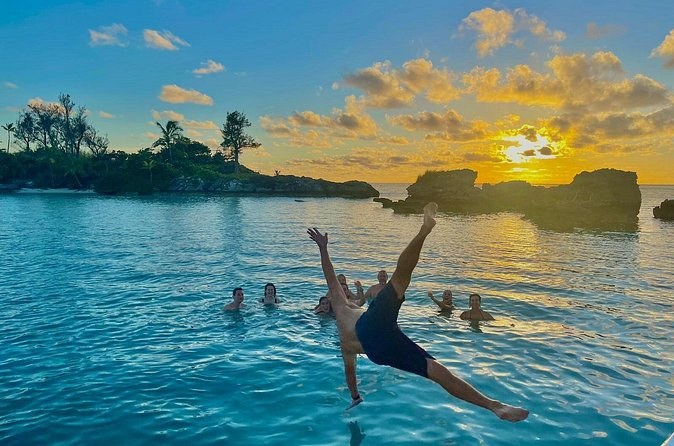
Private Sunset Cruise & Rum Swizzle
A private boat and captain for up to ten, for one hour at the end of the day, with a gallon of homemade rum swizzle, water and floats. Bring your own drinks for the cooler; the price is per group.
From $500 per group (up to 10)
Check Availability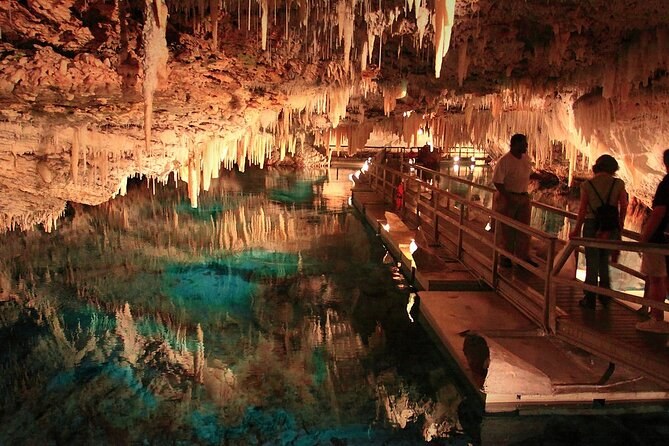
Crystal Caves Adventure & Scenic Tour
Three and a half hours from the cruise pier by minibus, with 40 minutes in Crystal Cave, the admission paid and the reservation made for the group. It runs with ten guests or more.
From $85 per person
Check AvailabilityNext: Deciding where to swim once you are there? Read our guide to the beaches. The full range sits side by side on Bermuda Tours.