Bermuda Shipwrecks Snorkelers Can See
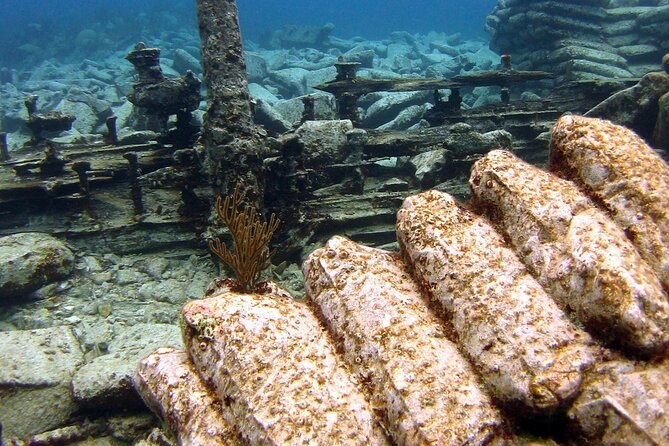
The short answer. Three wrecks are on the snorkel and glass-bottom menu: HMS Vixen, close to the Dockyard; and the Constellation and the Montana, side by side on the offshore reef. The Montana lies in about 30 feet of water, shallow enough to see from the surface. Every one is reached by boat, and Bermuda snorkeling tours take you with the gear in the fare.
The wrecks at a glance
| Wreck | How you see it | Depth | Tour |
|---|---|---|---|
| HMS Vixen | Glass bottom, or snorkel nearby | The bow shows above water | Glass-bottom boat or combo |
| The Constellation | Snorkel | Beside the Montana | Shipwreck snorkel |
| The Montana | Snorkel | About 30 feet | Shipwreck snorkel |
That is the menu. Here is what makes each one worth the boat ride, and a few things you may not expect.
1. The reef that sinks ships is the reef you snorkel
Bermuda's reefs are the northernmost coral reefs of the Atlantic, according to the Bermuda Institute of Ocean Sciences. They ring the island in a shallow line, and that line is what brings you here to snorkel. It is also why the island has so many wrecks: a ship that misjudged the reef line ran onto it.
2. The lighthouse was built because of them
In the ten years before Gibbs Hill Lighthouse went up, 39 vessels were wrecked off the west end, according to the lighthouse's own history. The tower was lit in 1846. It is 117 feet tall on a 245-foot hill. On the pink-bus and shops drives you can climb its 185 steps for US$2.50.
3. The Montana was a Civil War blockade runner
The Montana was a paddle steamer that ran cargo between England, Bermuda and North Carolina during the American Civil War. The Department of Environment describes it as a 236-foot side-paddlewheel steamer built in Glasgow, with a top speed of 15 knots. It sailed under four names: Nola, Gloria, Paramount and, last, Montana.
4. The reef did what the navy could not
A fast blockade runner was built to outrun warships. The Montana did that, and then hit the reef in December 1863. The department's own line is that the shallow reefs of Bermuda accomplished what no Union gunboat could do. You are snorkeling over the proof.
5. You can still see the engine
The Montana lies in about 30 feet of water, partly intact. Its steam boilers and the frames of its paddlewheels still mark the site, which is why it suits snorkelers as well as divers. Look straight down on a calm day and the shapes are plain.
6. Two wrecks share one site
The Montana sits alongside the Constellation, so one stop gives you both. The shipwreck snorkel goes out to the offshore reef for exactly that, with gear and flotation in the fare, for $105. Daniel K. rated the snorkeling good and saw a couple of wrecks, though the colours are softer than on reefs further south.
7. It is a protected site
The Montana is part of the Bermuda Dive Sites program and has a 500-metre no-fishing limit around it. The general rules apply too. Boats should not anchor in seagrass or on coral, and visitors must not collect living shells. Look, photograph, and leave it as you found it.
8. The Vixen is the wreck you can see without getting wet
HMS Vixen lies close enough to the Dockyard for a glass-bottom boat to visit on an hour-and-a-half trip, and its bow still shows above the water. Candice S. saw exactly what the listing promised: the Vixen, the reef, the seagrass and sea turtles on the way. Charles W. found the wreck so covered in coral that the ship was hard to make out. That is the honest range: part reef, part ship.
9. You can stand in 3 feet of water beside it
The glass-bottom and snorkel combination anchors in about 3 feet of water near the Vixen. So you look at the wreck through the hull first, then snorkel or wade in the shallows. It is the gentlest way in the water here, though anyone snorkeling must be able to swim where they cannot stand. The combination trip costs $105 for three hours.
10. The list of protected wrecks is long
The Department of Environment protects more wrecks than the three on the tour menu, among them the Superior of 1837, the Mary Celestia of 1864 and the Cristobal Colon of 1936. The shipwreck artifacts in the National Museum of Bermuda are a short walk from the cruise ships, and a good hour before or after a boat.
11. A private boat can find a wreck too
The wrecks are not only for the shared snorkel boats. Cheri N.'s group on the cliff-jumping charter started at a shipwreck full of fish, moved on to a reef, and finished in a small beach cove. That charter costs $900 for a group of up to ten, with an hour at each of three stops, so it suits a family who want the wreck and the cliffs in one outing. Ask the captain when you book, because a private boat's route is set by the day's sea and your group.
What snorkeling over a wreck is like
The boat stops beside the site, the crew hand out masks, fins and flotation, and you swim off the stern. On the smaller boats the captain shows first-timers how the gear works before anyone gets in. You float face down and look along the wreck, not straight down, and the shapes come together as you move: a boiler here, a line of frames there, and fish around all of it.
What you find is mostly life. Diana S. took the two-stop trip with sons of 10 and 12 and a mother of 70, and found the wreck and the lagoon full of fish, coral and sea fans. Alison J. had good visibility and lots of fish, though the ride out was bumpy in a rough sea. If you are prone to seasickness, take something before you board, and keep your eyes on the horizon on the way out.
Choosing your wreck trip
The trips differ in how much time you spend in the water:
- Stay dry: the glass-bottom boat, $78, an hour and a half over the Vixen and the reef.
- Dry, then wet: the glass-bottom combination, $105, three hours with a shallow snorkel.
- The deeper wrecks: the shipwreck snorkel, $105, to the Constellation and the Montana.
- Small group: the two-stop snorkel, a reef and a wreck, ten guests at most, from age 7.
Water temperature matters for the offshore trip. Brandon G. found the sea still a little cool in mid-May, and E H. snorkeled in March in rough water and thought the wrecks worth it. The Bermuda Weather Service averages put the sea above 80°F from July to September. The month-by-month detail is on Bermuda weather, and the Montana's place on the reef line is on things to do in Bermuda.
If you are not sure whether to go dry or wet, read our comparison of the glass bottom and the snorkel. The wider history of the island is in Bermuda facts, the boats' meeting points are on the Bermuda map, and every way onto the water is compared on Bermuda boat tours. Swimming questions are answered in the FAQs.
Boats that reach the wrecks
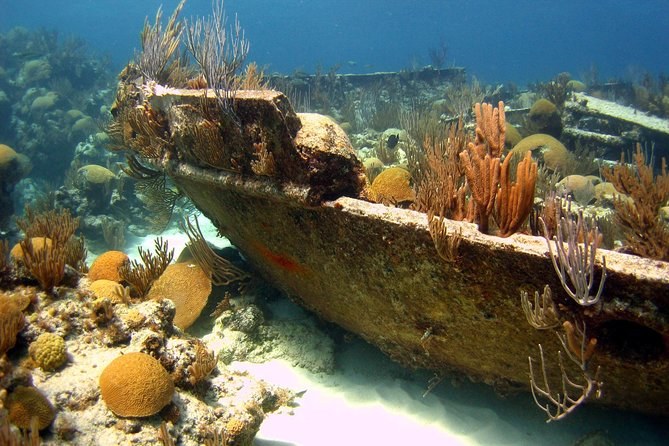
Shipwreck Snorkel in Bermuda
Three hours to the offshore reef and the wrecks of the Constellation and the Montana, with gear and flotation in the fare. For competent swimmers from age 5; in rough seas it moves to an inshore wreck and a shoreline reef.
From $105 per person
Check Availability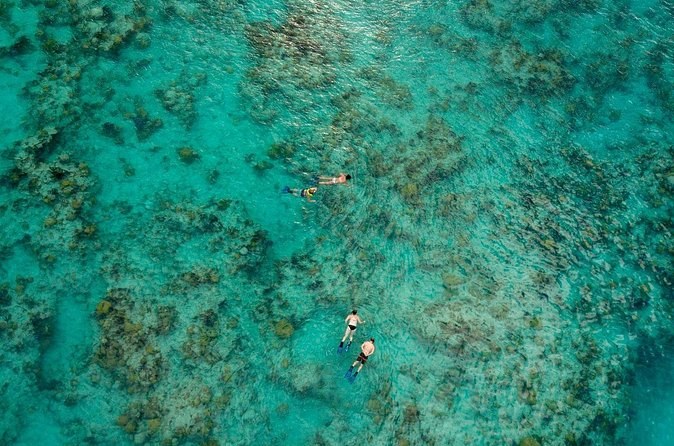
Two Stop Snorkel and Shipwreck from Dockyard
Two snorkel stops, a coral reef and a wreck, in two and a half hours from the Dockyard, with ten guests at most. The captain shows you the gear; you need to swim in deep water and be 7 or older.
From $127 per person
Check Availability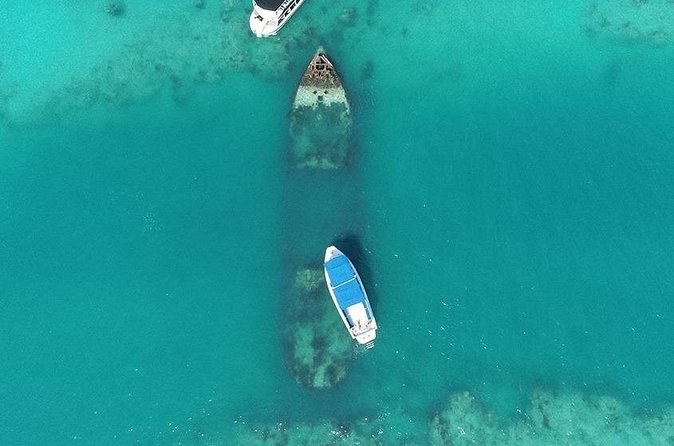
Bermuda Glass Bottom Boat Cruise
An hour and a half over the reef, the seagrass and the wreck of HMS Vixen, seen through the hull without getting wet. There is a cash bar on board, and you step on and off the boat.
From $78 per person
Check AvailabilityNext: See how the helmet dive and the glass bottoms work for young swimmers in our guide to Bermuda with children. Every fare sits side by side on Bermuda Tours.